Author: Emanuele Feronato
-
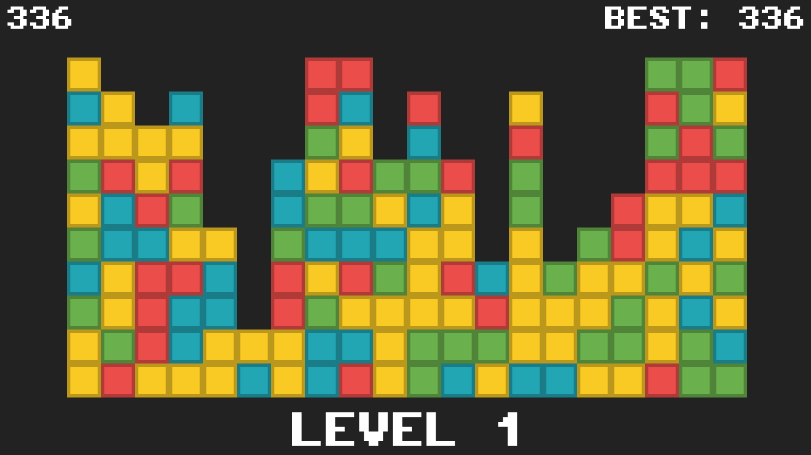
NacatamalOn HTML5 SameGame powered by samegame-engine, a headless TypeScript class
The same headless samegame-engine that powers my Phaser 4 SameGame, unchanged, now rendered with NacatamalOn: Mega Drive dithering, a CRT tube and art painted entirely in code, with the full TypeScript source.
-
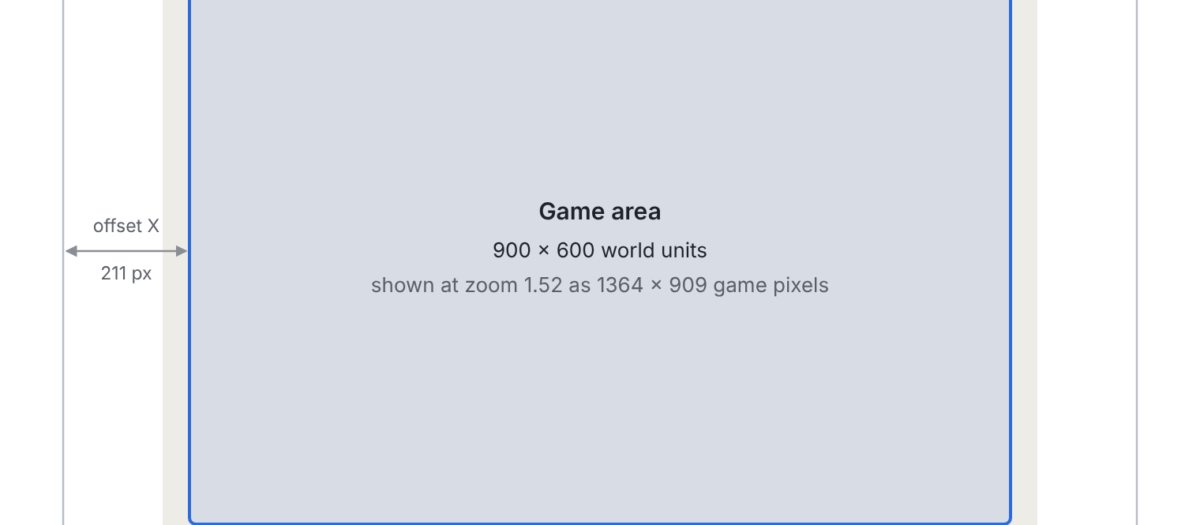
Understanding Phaser’s EXPAND scale mode
Phaser’s EXPAND scale mode fills any screen without black bars, but the game size changes on every device. Here’s how you can keep the gameplay identical anyway, with a camera zoom and a fixed game area.
-
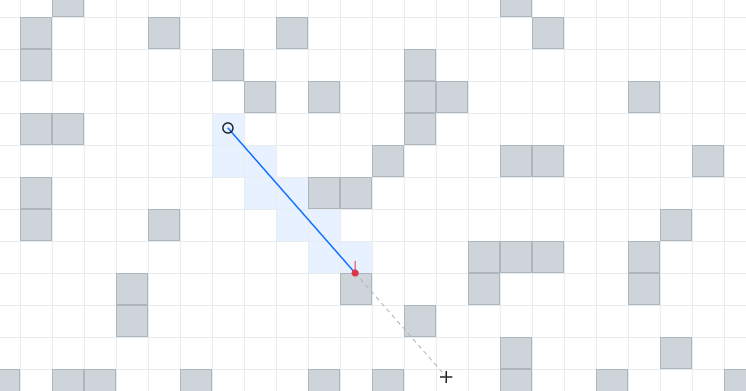
Understanding raycasting in 2D games, and using it with a free commented open source JavaScript library
Raycasting is one of those things that keeps coming back in game development: vision cones, fog of war, bullets, and even moving a character against walls. I wrote a small open source JavaScript library that answers the one question behind all of it, what does a ray hit, and I explain why knowing only about axis aligned boxes is enough for most 2D games. Ten interactive examples included.
-
Build a game like mobile smash hit Meowdoku in vanilla JavaScript in just a few lines of code
Meowdoku is a hit cat puzzle: one cat per row, column and colour region, and no two may touch, not even diagonally. I rebuilt it from scratch in vanilla JavaScript, and here is how.
-
Build a HTML5 game like Geometry Dash using Phaser 4 and TypeScript, with a simple custom physics engine
The cube in Geometry Dash always lands perfectly square. It's not rigid-body physics: the spin is purely cosmetic. The hitbox never rotates, and the game snaps the angle to 90 degrees on landing. I rebuilt it as an HTML5 game in Phaser 4 + TypeScript, with my own physics engine.
-
20 years of blogging: a two-decade journey through web gaming history
Today, my blog turns 20! From the golden age of Adobe Flash in 2006 to WebGPU and 3D browsers in 2026, it’s been a wild ride. No self-praise today, just a huge THANK YOU to the dev community and a quick trip down web gaming memory lane
-
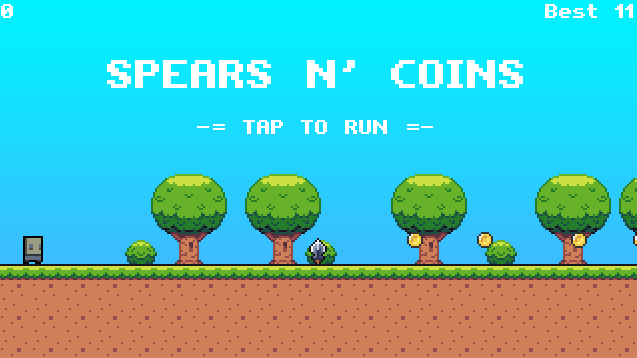
HTML5 game Spears N’ Coins with Phaser 4.1 and TypeScript: a tiny endless runner like Dashy Panda
Spears N' Coins is a HTML5 fast-paced endless runner powered by Phaser 4 and TypeScript featuring procedural generation and pixel art parallax scrolling starting from the Create Phaser Game app. Full source code available.
-
Getting Started with Phaser 4: Vite + TypeScript Setup, using the official Create Game App
Phaser 4 has arrived, bringing a fresh foundation for modern web game development. Learn to set up a brand new project using the official Create Game App, powered by Vite and TypeScript, and walk through the essential structure to get your first game up and running quickly.
-
Phaser 4 HTML5 SameGame powered by samegame-engine, a headless TypeScript class
Complete HTML5 SameGame clone built with Phaser 4, powered by a fully headless TypeScript game engine. It features a clean separation between logic and rendering, reusable core mechanics, and an efficient implementation based on object pooling and delta-driven animations.
-
Build a highly customizable mobile friendly HTML5 level selection screen controllable by tap, swipe and mouse wheel, written in TypeScript and powered by Phaser
A clean, fully paginated level selection system built in Phaser 4 with TypeScript, featuring horizontal drag, direction-aware snap, mouse wheel navigation and event-driven thumbnails. The UI components are fully decoupled from scene logic and designed with clear state separation. Complete source code available for download, ready to use and extend.
-
Simulating rotating gravity and perimeter based movement like in “Be Brave, Barb” game with Phaser, without any physics engine
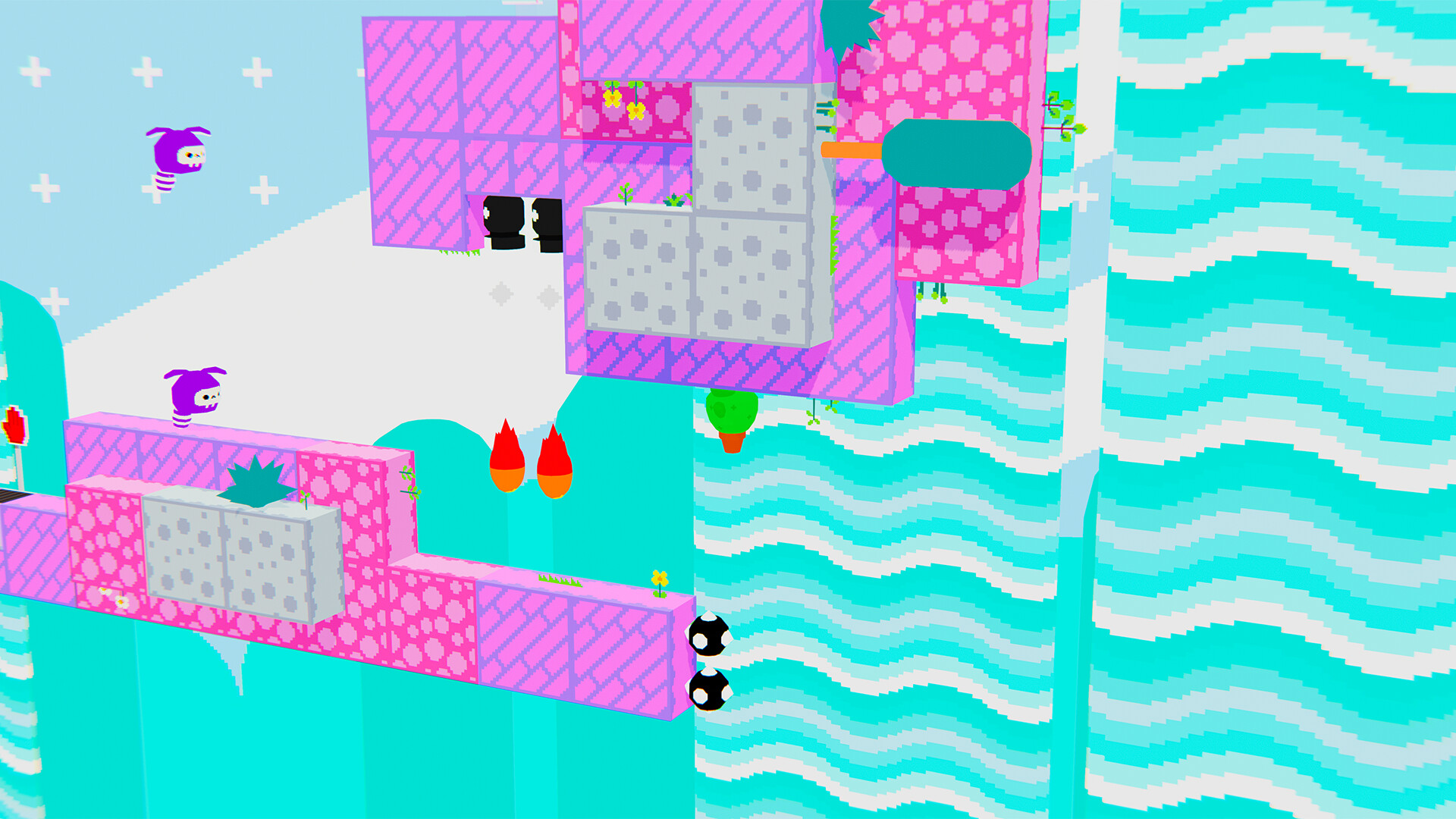
HTML5 platformer engine inspired by Be Brave, Barb, built without physics. Hero walks along a dynamically generated perimeter, switches between four gravity directions, and reattaches to surfaces using continuous collision detection. Everything is driven by pure geometry, vector math, and segment intersection.
-
From Dense Grids to Clean Perimeters: Extracting Shapes with Greedy Geometry – Tiled and JavaScript example
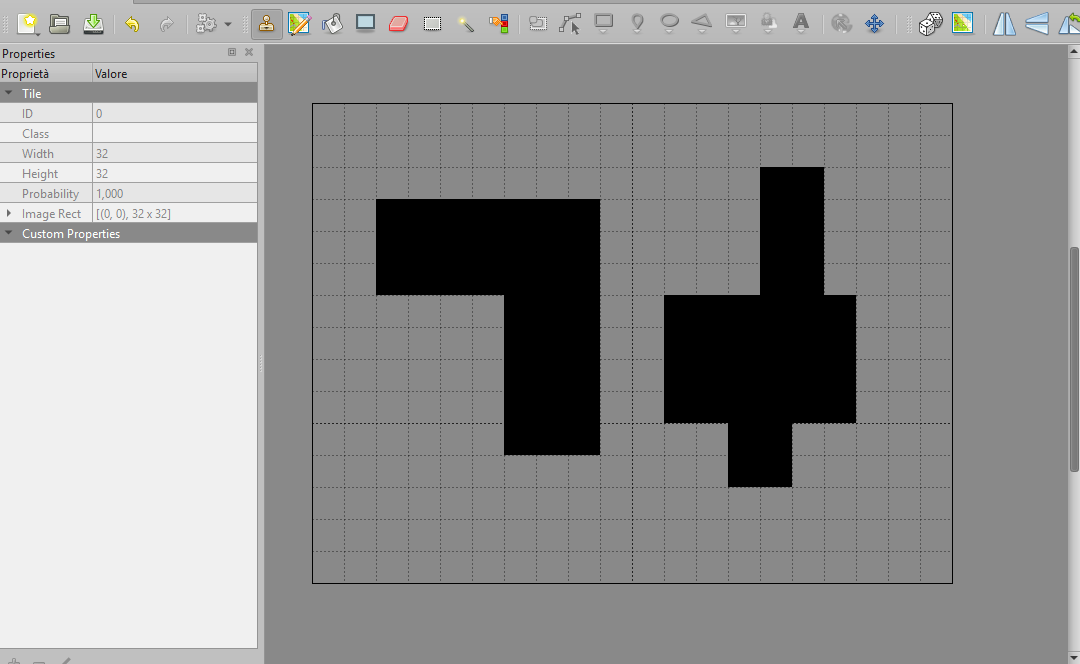
A dense grid hides simple shapes. This example uses a greedy algorithm to extract the true external perimeter from binary grid data, removing all internal edges and collapsing hundreds of cells into a clean geometric outline. Everything that follows, such as rendering, collision and movement, becomes simpler once the grid turns into a shape.